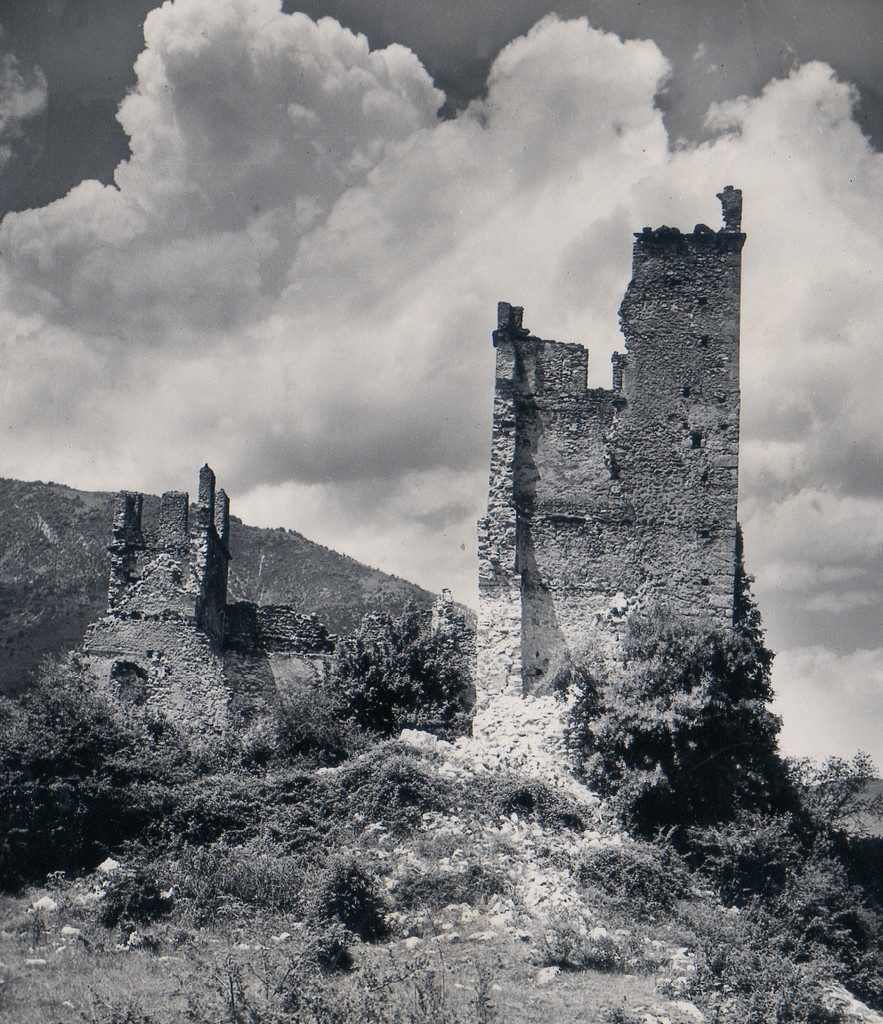
Discovering the medieval fortress
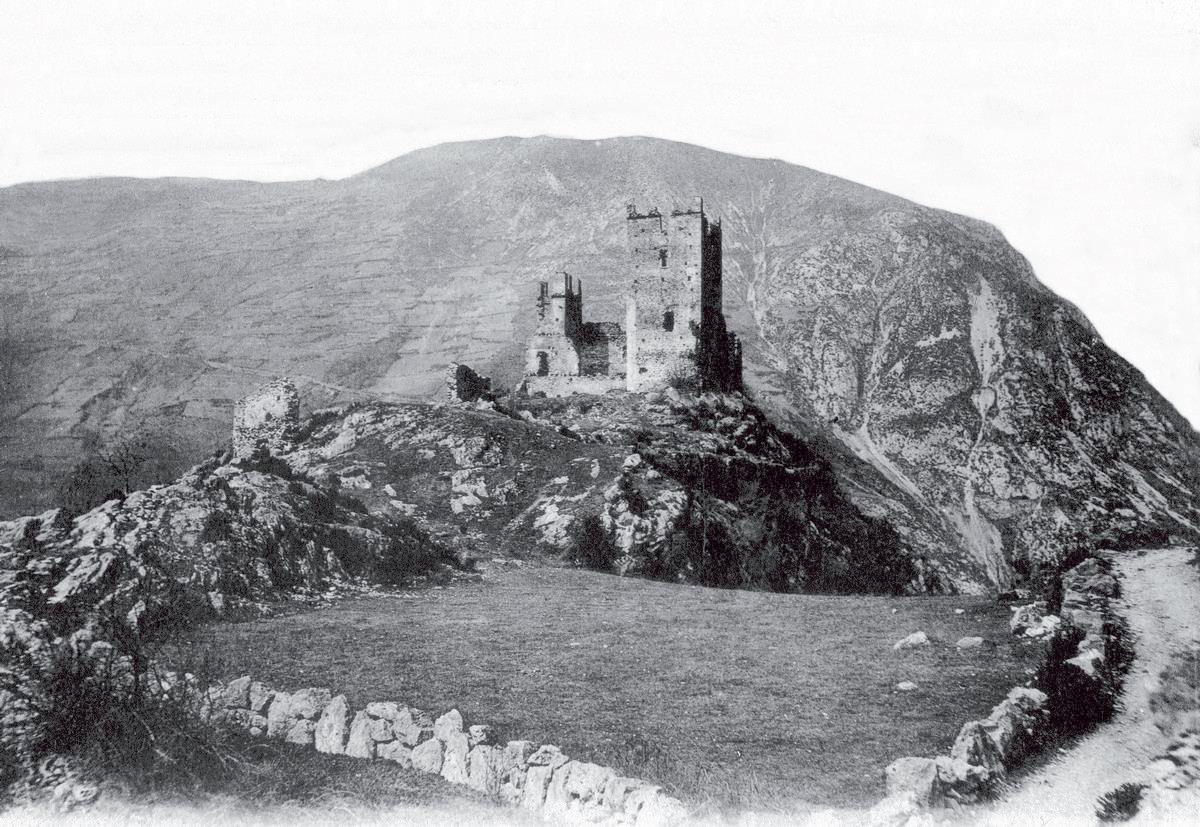
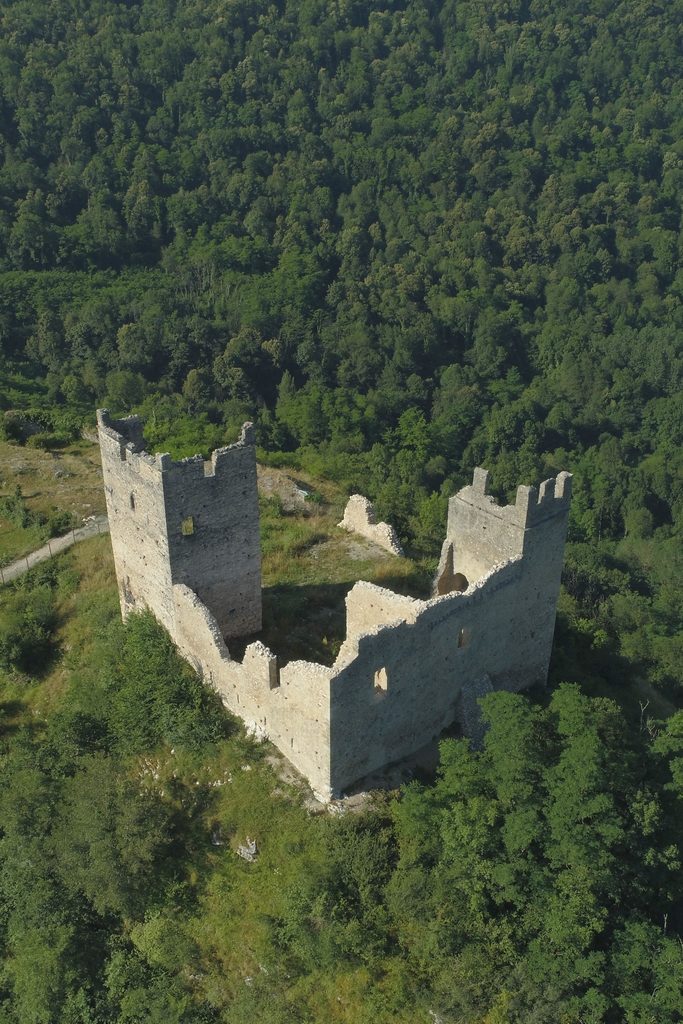
The castle is built on an elliptical platform, measuring approximately 100 m long by 30 m wide.
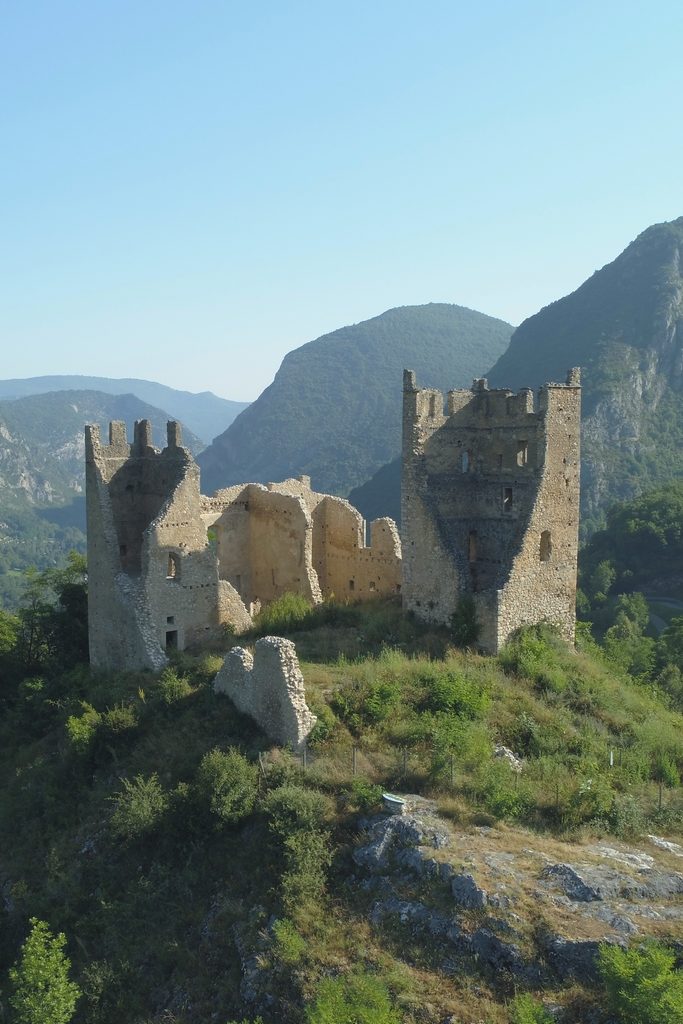
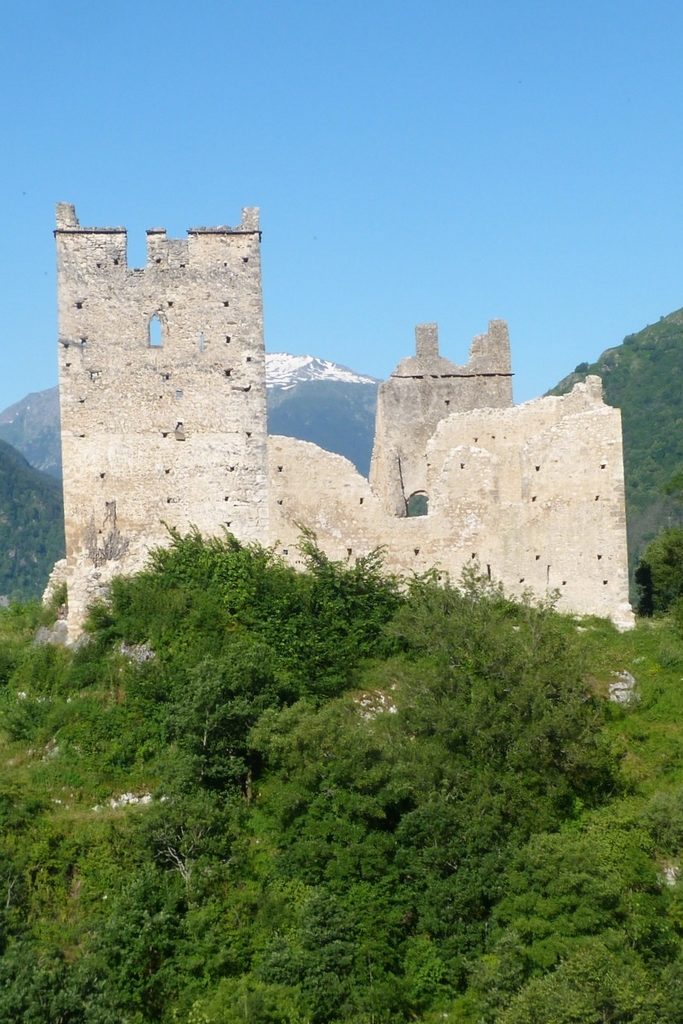
While the farmyard (A) was to be located in the southern part of the platform, a quadrangular unit remains in the northern part (B). This development, sometimes referred to as a “castral cubicle”, includes a dungeon (C), a tower, known as a “cistern tower” (D), as well as a main building (E).
From a plan drawn up in 1894, we know that other constructions completed this ensemble. A few sections of the preserved walls (F), correspond to the remains of an enclosure, which certainly circled the platform, probably dating from the 12th century, it is built of roughly hewn rubble bonded with lime mortar.
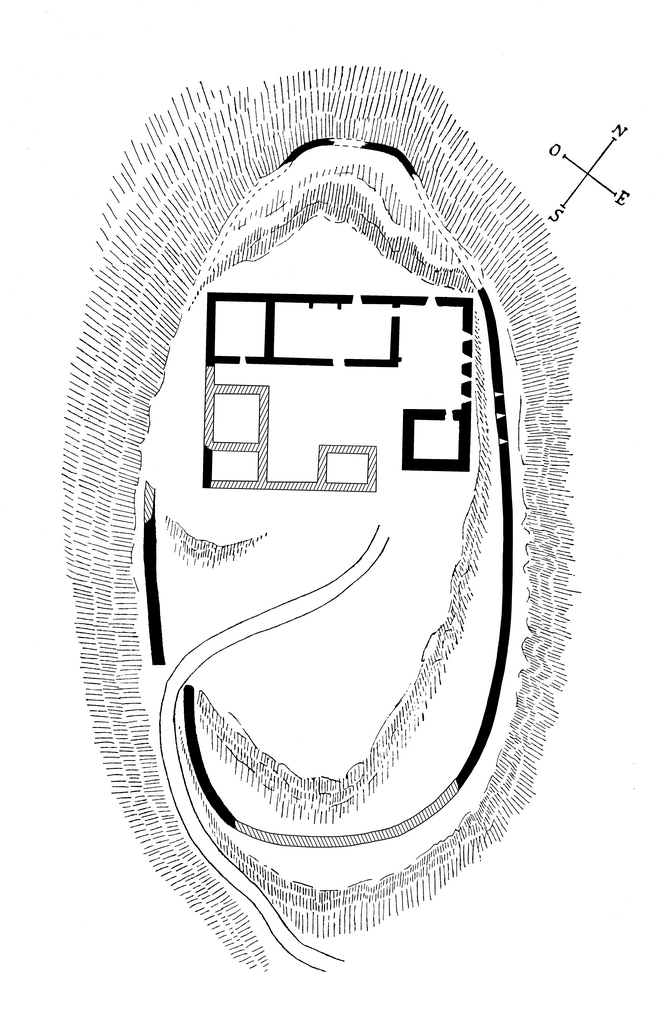
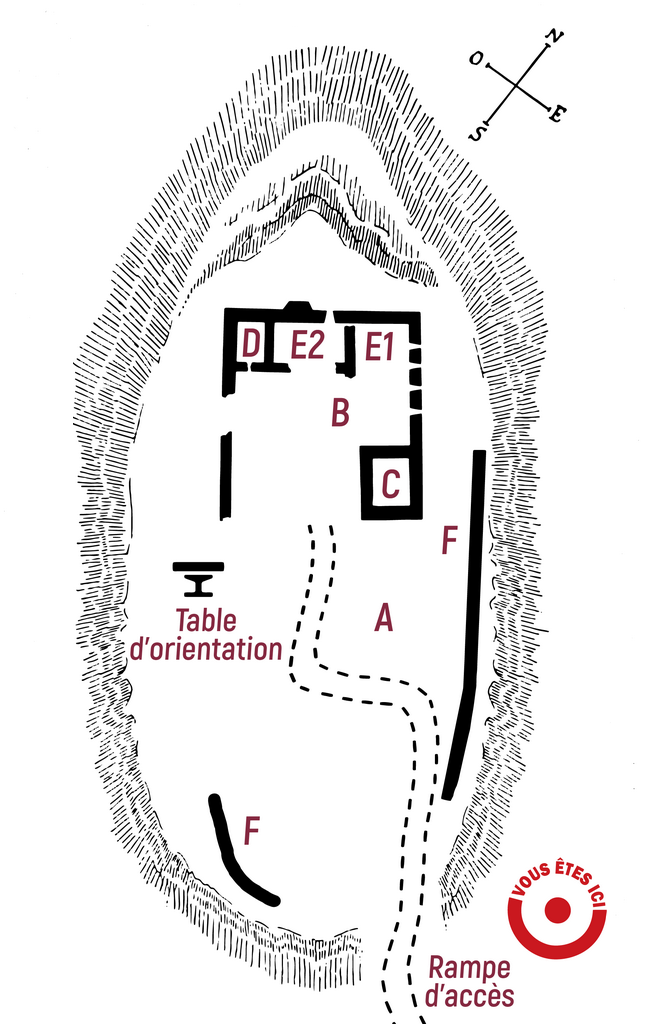
| Plan after Barrière-Flavy – 1894. | Schematic plan of the remains currently visible © AACM |
The dungeon (C)
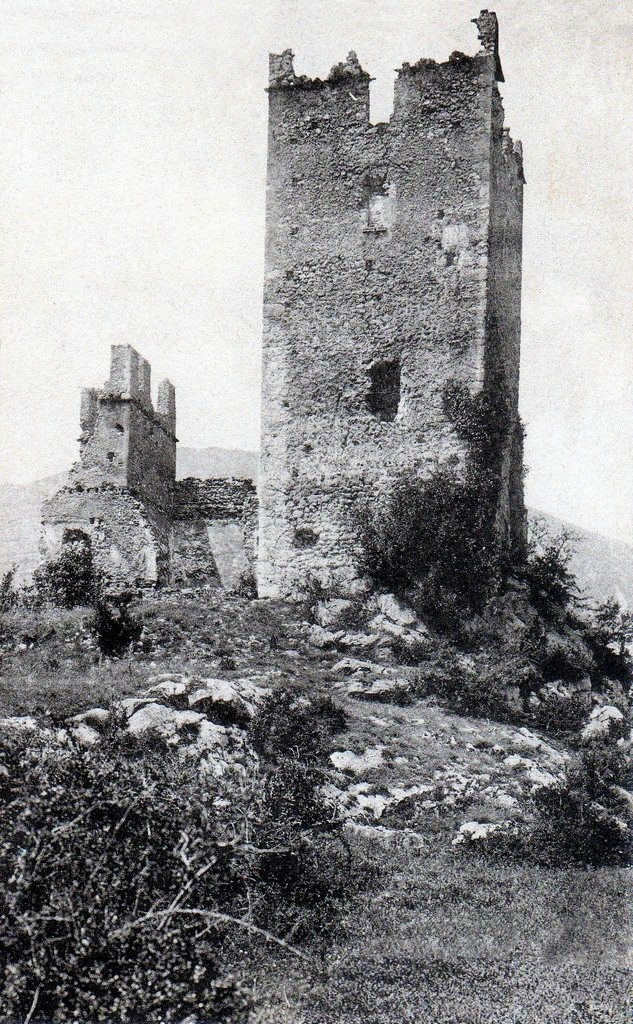
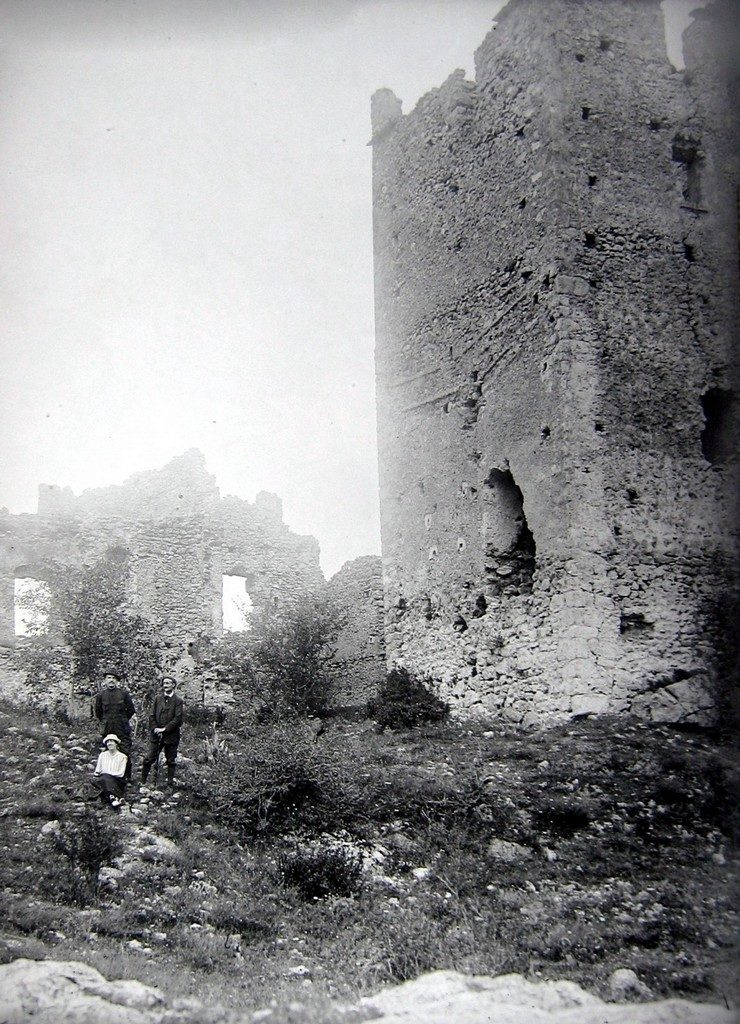
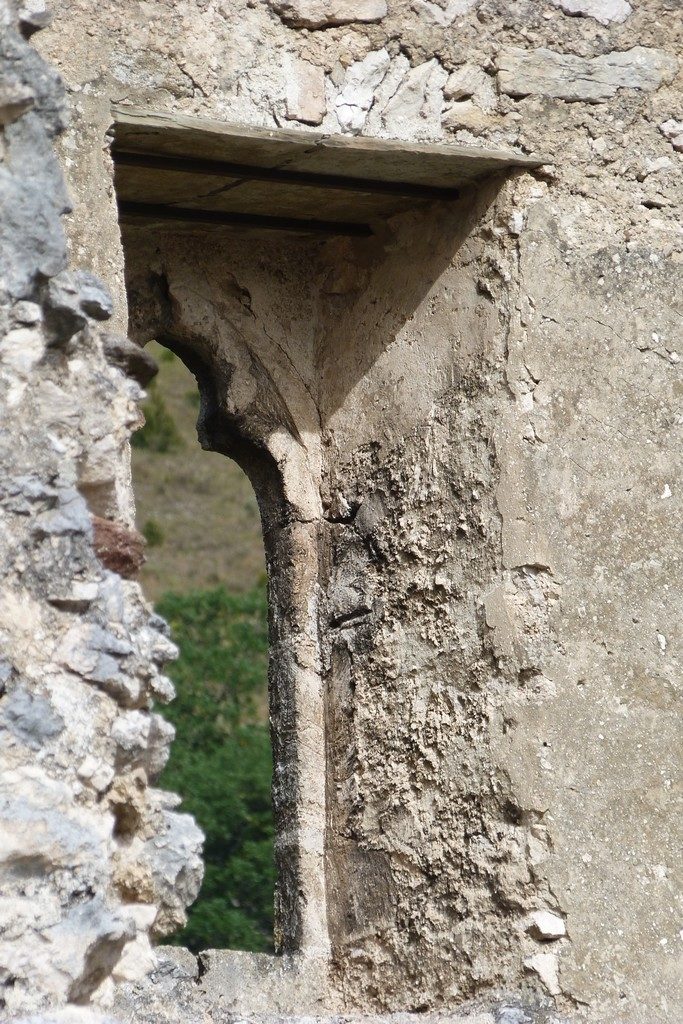
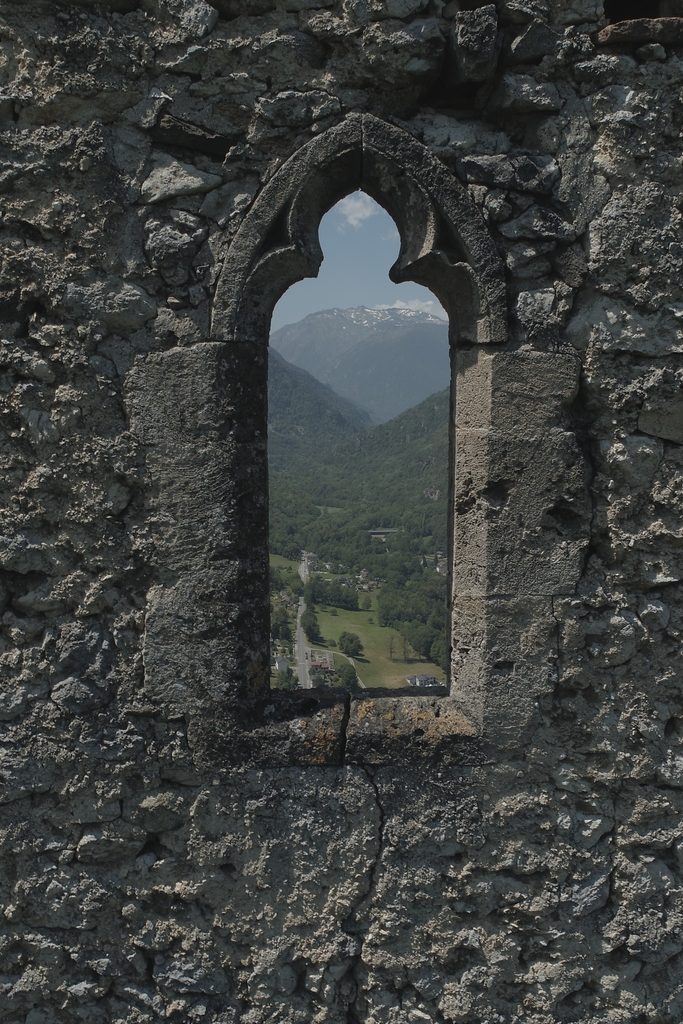
The dungeon, the main tower of the castle, could date, in part, from the 12th century and would undoubtedly have been altered in the 14th century. It has retained its northern and eastern faces in their entirety, the other two having partially collapsed in 1948-1949. This tower, 8m x 6m wide, has walls 1.4m thick at its base, which become thinner as they rise. They are built using the blocking technique, that is to say that the inside of the walls is filled with a mixture of pebbles and lime mortar, while the outside is mounted in roughly cut rubble arranged in layers. regular. This tower had four floors and ended with battlements. These were filled in at an unknown date, perhaps in order to create a new habitable floor. A new aliasing has been added to raise this dungeon to 19 m high. This tower has no loopholes, but the third floor is pierced in the east by a three-lobed bay, possibly dating from the 14th century alterations.
The “cistern tower” (D)
This tower, also crenellated and around 15 m high, was probably built during redevelopments in the 14th century. It has a vaulted room on the lower level. Traces of tile mortar (red coated), making the construction waterproof, indicate that it could be a cistern, the capacity of which can be estimated at around thirty m3. The door that is fitted there, with its frame, is a restoration choice by the architect to consolidate a breach in the wall of the cistern.
The main building (E)
The two towers were linked by an “L” shaped building with at least two rooms.
A room adjacent to the keep (E1) has five archers, four on the east wall and one on the north wall. The room adjoining the “cistern tower” (E2) had a fireplace, the opening of which, no doubt after the building was constructed, had weakened the latter, necessitating the construction of buttresses. Boulin holes (the boulin is a piece of wood sealed in a wall to support a scaffolding), visible in several places, testify to the construction method of this building.